Is Fr. Patrick J. Schlabs Taking a Shot at Fr. Calvin Robinson?
 Embryo Parson Posted on Saturday, April 27, 2024 at 12:46AM
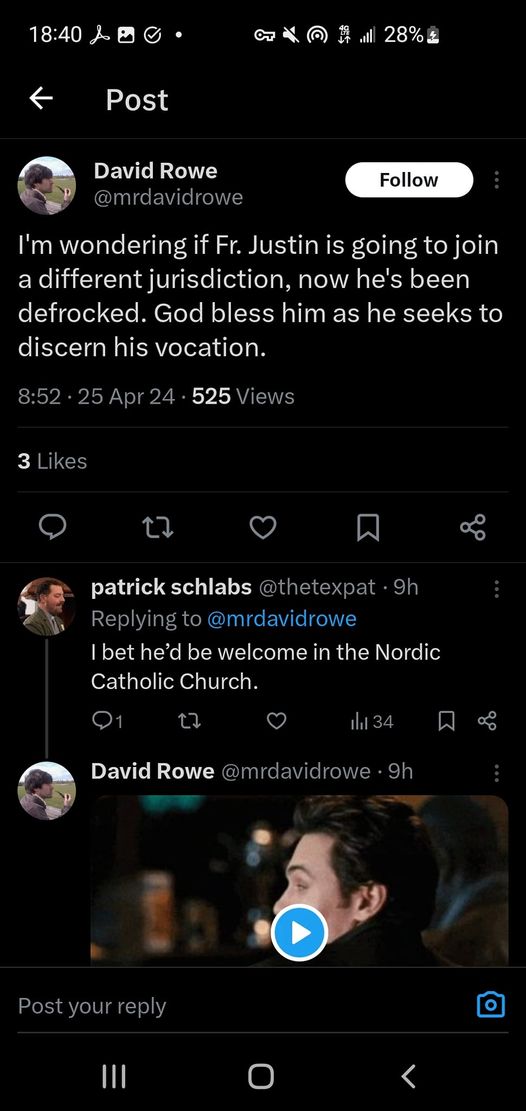
 I was ordained a deacon with Fr. Schlabs back in 2014 when we were both in AMiA. He would go on to ACNA and become the "Canon for Cultural Engagement" in the ACNA's Diocese of South Carolina, and I would go on to serve as a healthcare chaplain and a priest in the Anglican Continuum.
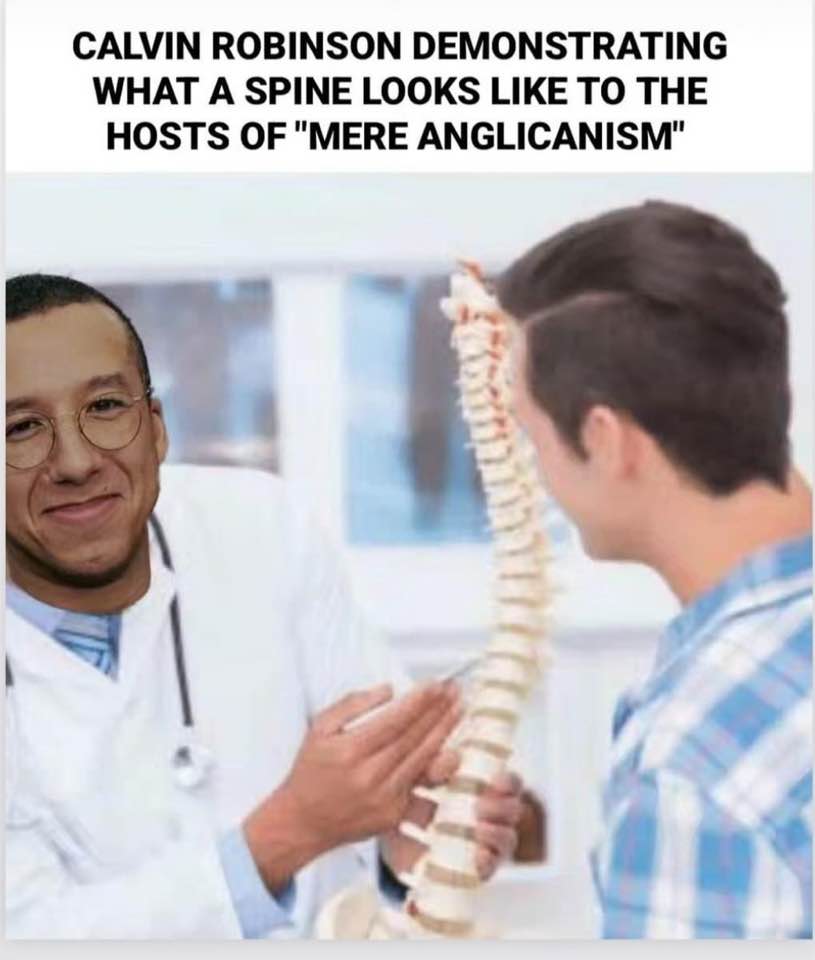
I don't know quite what to make of Canon Schlabs' comment here, but on the face of it, it does appear that he's taking a shot at Fr. Calvin Robinson, who is a priest canonically resident in the Nordic Catholic Church, but whose DNA is Anglican of the Catholic variety. And it must be noted that it was principals in the Anglican Diocese of South Carlolina, where Schlabs is canonically resident, who "cancelled" Fr. Robinson at the Mere Anglican Conference in 2024. Those folks recieved a lot of deserved flak for their behavior towards Fr. Robinson, and that gives me reason to think that Fr. Schlabs is exhibiting some bad blood here.
But I could be wrong. Maybe he'll chime in and explain. If he does, I will delete this post.
More likely he won't, however. And if he doesn't, well, all I can say is that his behavior is petty.
A fellow Continuing priest put it this way in response to this screen capture: "Imagine being a canon for cultural engagement and managing to insult that many cultures in one post".
"Three Streams" Anglicanism, ACNA, AMiA, Anglican Church in North America (ACNA), Anglican Realignment, Continuing Anglicanism, Feminism, Feminized Christianity, Fr. Calvin Robinson, Mere Anglican Conference 2024 , Neo-Anglicanism, Old Catholics, Orthodox Anglican Church, Traditional Anglicanism, Wokeness, Women's Ordination S.M. Hutchens on Calvin Robinson and the 2024 Mere Anglicanism Conference
Embryo Parson Posted on Friday, April 26, 2024 at 07:55PM "Mere Anglicanism, according to the group’s website, is 'an organization of Anglican Christians seeking to engage the culture with the Gospel of Jesus Christ by discipling, training, and educating lay and clergy leaders for the renewal of biblical and orthodox Anglicanism.' Thus, this group would be supposed to stand against progressivist corruptions of present-day Anglicanism, including those involving the sexual confusions in which it is entangled. At the group’s recent gathering in Charleston, South Carolina, one of the invited speakers was Fr. Calvin Robinson, who, after giving his paper, was barred from further participation in the conference. He writes:
On Friday 19th January [2024] I gave a talk at the Mere Anglicanism conference in Charleston, South Carolina. I was given the brief of, “Critical Theories are Antithetical to the Gospel.” I wanted to address the root of the problem rather than the symptoms, which we spend too much time focusing on. It was my point that the reason Gender Theory, Queer Theory and Critical Race Theory are so prevalent in the Church today is because we have conceded too much ground to Feminism.
Fr. Robinson asserted that women priests were a direct product of feminist influence and concluded that:
Feminism—an arm of liberalism—is the gate by which all the other woke ideas gain ground. They are all part of the same ideology, but Feminism is the brute force which breaks down the wall for all the others. . . . What combines queer theory, gender theory, [and] critical race theory? Their attempt to destroy the patriarchy and smash heteronormativity. [This is] the language of Marxism. These are not the arguments of theology, but of philosophy. They are weapons of the enemy, as instituted by the philosopher Karl Marx.
Some members of the audience were offended by Fr. Robinson’s direct association of women’s ordination and feminism with Critical Theory and Marxism. As a result of the offense, he was called before a bishop, who strongly reprimanded him, and barred from further participation in conference activities by its organizers. There were, it appears, certain conclusions he was not permitted to draw about the roots of Critical Theory, his assigned topic, and the conference did not wish to hear about a certain application of its energies in particular.
It is a continuing source of wonderment to this writer that so many organizations claiming to admire C. S. Lewis hold events celebrating his life and writing and trade upon his thinking (by, for example, giving themselves names like 'Mere Anglicanism') while ignoring his well-known opinion, echoed by Fr. Robinson, that women’s ordination, while bearing its own form of secular rationality, isn’t Christian at all. Rather, by setting at naught the symbolic weight of maleness in Christian presbyters, it results in something 'not near so much like a Church' (as Lewis takes it from Jane Austen’s Bingley). For agreement with this opinion, Fr. Robinson, who dared to identify some of the deformations encouraged by this un-Christian neoplasm, has been banished by people who put themselves forward as 'biblical and orthodox Anglicans' in the style of C. S. Lewis.
If Lewis was right, it calls into question the 'sustainability'—not of some form of feminized religion—but of Christianity itself in sects that profess to be orthodox but persist in ordaining women."
(S.M. Hutchens is Senior Editor of Touchstone Magazine. Subscribe to here if you're not already a subscriber. This is a magazine that every tradtional Christian needs to be reading.)
Mere Priestesses
Embryo Parson Posted on Wednesday, April 24, 2024 at 02:34PM "Controversy surrounds the disinvitation of Fr. Calvin Robinson from the closing panel of the Mere Anglicanism conference held in Charleston, South Carolina, in January. Asked to lecture on the topic “Critical Theories Are Antithetical to the Gospel,” Robinson argued during the main session that the spread of critical theory in the church was inevitable given the church’s acceptance of feminism, with women’s ordination being a decisive concession: Confuse men’s and women’s roles, and it’s hard to resist liberalism tout court. The sponsoring bishop and conference organizers found Robinson’s presentation “inexcusably provocative, and completely lacking in charity,” especially toward the female clergy in attendance, and so barred him from the closing panel discussion.
The conference’s title, a nod to C. S. Lewis’s Mere Christianity, implies that participants hold in common the essentials of Anglican belief. The conference is advertised as a venue in which difficult topics facing the Church can be thoughtfully engaged. Accordingly, Robinson was candid: “The priestess issue is directly related to the trans issue. If a man can become a woman, and a woman can become a man, why can’t a woman become a priest and a man become a mother?” Though this question may strike supporters of women’s ordination as unnecessarily provocative, the same type of argument was made by the conference’s patron saint more than seventy-five years ago. Robinson and Lewis both articulate the position of mere Christianity against the fashionable theologies of their times. They state what was the consensus position of the Great Tradition, East and West, before critical theory infected Protestantism.
Read the rest here.
"Everyone I Don't Like. . . ."
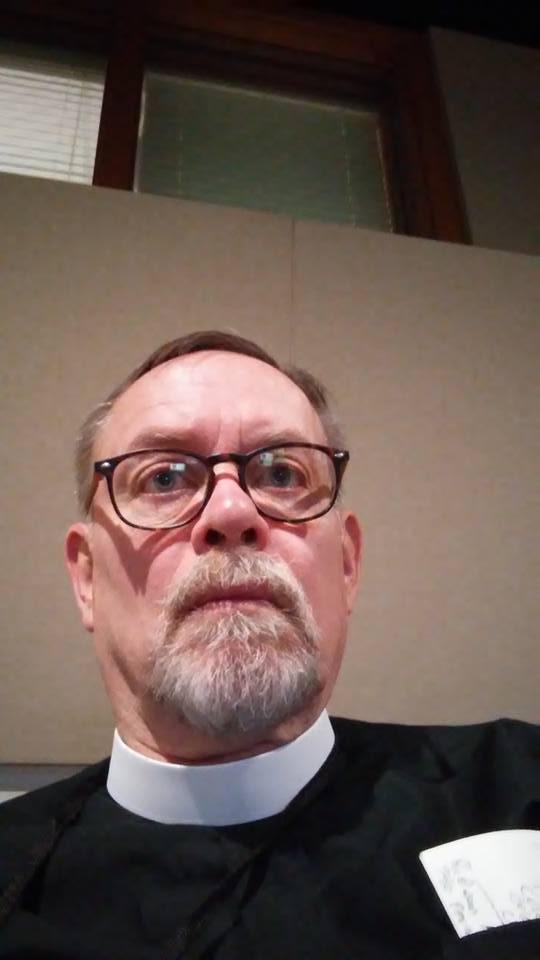
Embryo Parson Posted on Friday, April 12, 2024 at 10:07PM Joe Mahler (pictured immediately below), Donald Philip Veitch picture at bottom) and crew. If you're investigating Anglicanism, please accept both my theological and pastoral advice, and stay far away from these people. And please don't become an Anglican if you're really nothing more than a Presbyterian.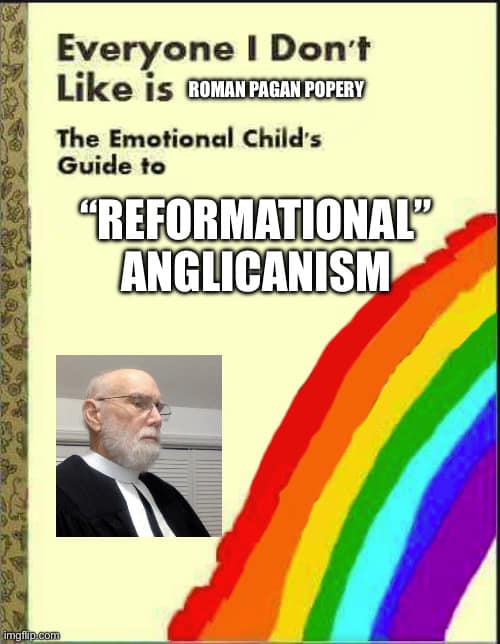
Anglo-Calvinism, Anglo-Catholicism, Calvinism, Caroline Divines, Crypto-Puritanism, Donald Philip Veitch, English Reformation, Fundamentalism, Historical Theology, Presbyterians With Prayer Books, Puritans, Roman Catholicism, The Problem of Anglican Identity, Tractarian Divines, Traditional Anglicanism The DNA Doesn't Lie
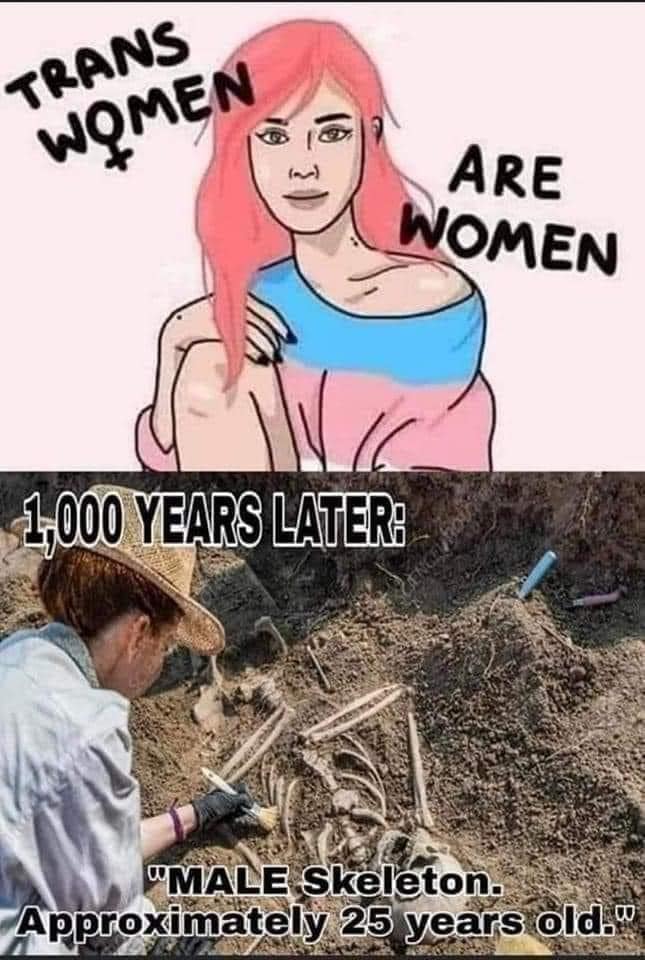
Embryo Parson Posted on Thursday, April 4, 2024 at 12:36PM In the days ahead I will be having a lot more to say about the question of the trad Anglican response to this particular form of lunacy and to the culture war lunacy of the Left generally.
"(I do) not give a rat’s hindquarters what liberals. . . think or say or do about anything. At this point in the dialectic, no dialogue is possible with them. They live in their own universe of lies and depravity." - Shrewsbury
"The woke mind virus is either defeated or nothing else matters." - Elon Musk
"Leftists aren't just bad people. They are the retrovirus of the electorate. . . ." - Some random guy
Share Article → Trad Worship Has Become Cool Again
Embryo Parson Posted on Wednesday, February 21, 2024 at 11:45AM From Fr. Mark Marshall. A must read.
"Still, one of the arguments for modernizing worship and the use of Christian sacred spaces is to be more relevant to emerging generations. But that is backwards, and the kids know it. If the church waters down its worship and becomes more like the world, it becomes less relevant and less attractive. The world is already much better at being like the world than the church — although God knows most of the Western church is trying to catch up. So how is the church being like the world relevant? Especially during times like this when the world is doing its worst to get more ugly and hellish by the day?"
Rosaria Butterfield
Embryo Parson Posted on Monday, February 19, 2024 at 05:25PM I have only recently heard about the writings of Rosaria Butterfield. I'm going to have to read more of her. Wake up, AMiA, ACNA, and the rest of you Neo-Anglicans. The historic Catholic and Anglican faith is inescapably patriarchal and not in any way feminist or even egalitarian, and when you ordain women to the ranks of clergy, you commit a horrific act.
Her bio:
"Rosaria Butterfield, a former tenured professor of English and women’s studies at Syracuse University, converted to Christ in 1999 in what she describes as a train wreck. Her memoir The Secret Thoughts of an Unlikely Convert chronicles that difficult journey. Rosaria is married to Kent, a Reformed Presbyterian pastor in North Carolina, and is a homeschool mother, author, and speaker.
Raised and educated in liberal Catholic settings, Rosaria fell in love with the world of words. In her late twenties, allured by feminist philosophy and LGBTQ+ advocacy, she adopted a lesbian identity. Rosaria earned her PhD from Ohio State University, then served in the English department and women's studies program at Syracuse University from 1992 to 2002. Her primary academic field was critical theory, specializing in queer theory. Her historical focus was 19th-century literature, informed by Freud, Marx, and Darwin. She advised the LGBTQ+ student group, wrote Syracuse University’s policy for same-sex couples, and actively lobbied for LGBTQ+ aims alongside her lesbian partner.
In 1997, while Rosaria was researching the Religious Right 'and their politics of hatred against people like me,' she wrote an article against the Promise Keepers. A response to that article triggered a meeting with Ken Smith, who became a resource on the Religious Right and their Bible, a confidant, and a friend. In 1999, after repeatedly reading the Bible in large chunks for her research, Rosaria converted to Christianity. Her first book, The Secret Thoughts of an Unlikely Convert, details her conversion and the cataclysmic fallout—in which she lost 'everything but the dog,' yet gained eternal life in Christ.
Rosaria’s second book, Openness Unhindered: Further Thoughts of an Unlikely Convert on Sexual Identity and Union with Christ, addresses questions of sin, identity, and repentance that she often encounters during speaking engagements. She discourages usage of the term 'gay Christian,' and she disputes 'conversion therapy,' in part because heterosexual sin is no more sanctified than homosexual sin. Her heart’s desire is for people to put the hands of the hurting into the hands of the Savior, who equips us to walk and grow in humility.
In her third book, The Gospel Comes with a House Key: Practicing Radically Ordinary Hospitality in Our Post-Christian World, Rosaria explores how God used a humble couple’s simple invitation to dinner to draw her—a radical, committed unbeliever—to himself. With this story of her conversion as a backdrop, she invites us into her home to show us how God can use this same “radical, ordinary hospitality” to bring the gospel to our lost friends and neighbors. Such hospitality sees our homes as not our own, but as God’s tools for the furtherance of his kingdom as we welcome those who look, think, believe, and act differently from us into our everyday, sometimes messy lives—helping them see what true Christian faith really looks like.
Rosaria is zealous for hospitality, loves her family, cherishes dogs, and enjoys coffee."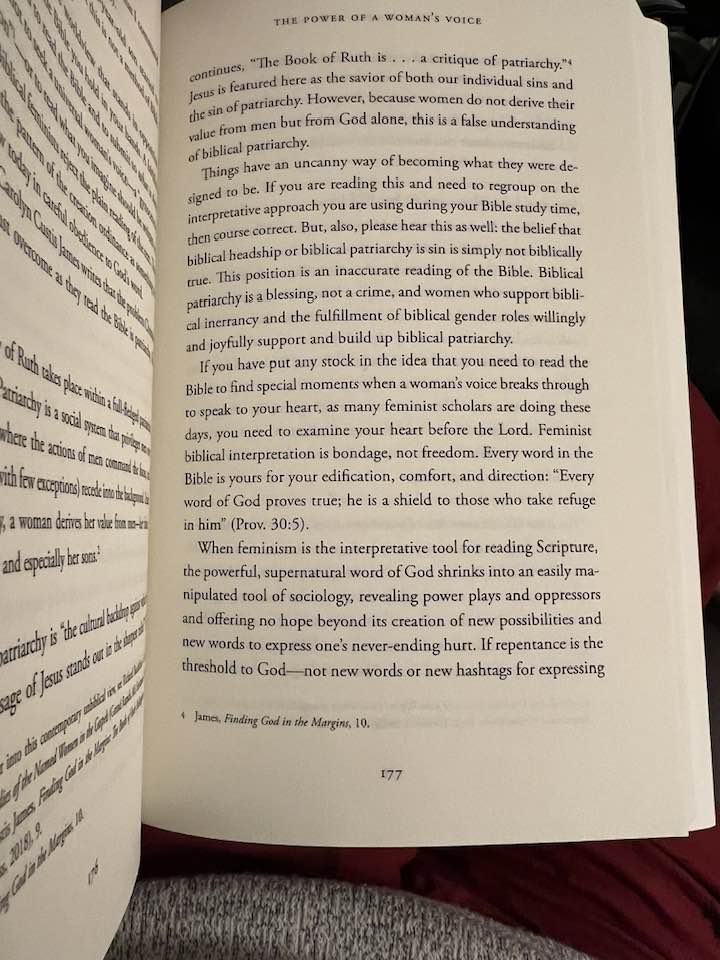
"Three Streams" Anglicanism, ACNA, AMiA, Anglican Church in North America (ACNA), Anglican Realignment, Convergence Movement, Critical Theory, Feminism, Feminized Christianity, Fr. Calvin Robinson, Hierarchy, Historical Theology, Holy Scripture, Liberal-leftism, Mere Anglican Conference 2024 , Neo-Anglicanism, Patriarchy, Traditional Anglicanism, Wokeness, Women's Ordination What Happened To The Asbury Revival?
Embryo Parson Posted on Friday, February 9, 2024 at 10:17PM *This.* I said *this* from the get-go. Here's my archive. From the article:
It’s been a year since the beginning of the Asbury “revival” in Wilmore, Kentucky. Last year, from February 8th to February 24th, up to 70,000 people visited Asbury University’s chapel to experience what they called an “outpouring,” an “awakening,” or a “revival.”
For two weeks many of the tens of thousands of people who visited Asbury responded to alter calls and witnessed “prophecies”, “speaking in tongues”, “casting out demons”, and “faith healing” at the chapel.
It was one of the biggest news stories at the time. It received attention from every major news outlet from CNN to Fox News. Conservative political commentators like Ben Shapiro, Tucker Carlson, and Charlie Kirk also talked about it on their shows.
What was happening at Asbury immediately became a sign of hope for Christianity and conservatism in America. Therefore, for some, the Asbury “revival” quickly became a test of the sincerity of some people’s relationship with God.
One revivalist preacher compared the Asbury revival to the Ark of the Covenant. He said:
“Do not pay attention to ‘arm-chair quarterbacks’ writing and critiquing Asbury Revival. They are much like Uzzah putting their hand on the ark. Let God do in this and through this moment what He desires and wills.”
Another preacher responding to those who expressed caution about the revival said: “This revival is revealing the hearts that have lost intimacy with the Lord.”
When I shared my concerns about Asbury, I received hundreds of comments saying:
“You sound like a Pharisee questioning Jesus,” “The Pharisaic legalist mindset is showing up, just like when Jesus showed up and didn’t fit their mold,” “I find this so sad. Reminds me of the religious leaders in Acts,” “You’re a Doubting Thomas,” and “You’re blaspheming the Holy Spirit.”
Another comment said: “I have no doubt God is going to use this movement to change churches and people.”
So a year later, what happened to the Asbury revival? Has God used the revival to change churches?
This week I called churches near Asbury University in Wilmore, Kentucky asking if they’ve experienced significant additions to their church membership or major changes in the lives of their church members because of the “revival.”
Every representative of the churches I spoke to said: “no.”
Nearly all of the people I spoke to said individuals from their churches visited Asbury Chapel during the revival, but they said they couldn’t highlight any lasting outcomes. One representative of a Slavic church said the Russia-Ukraine war has had a more noticeable impact on its members than the “revival.”
Last February, Zack Meerkrabs, the pastor whose sermon apparently started the revival said no one would know if it was a real revival until months later. A year later, it looks like what happened at Asbury was a fad, not a revival.
It was indeed. What's more, we don't need revival(ism).
Meet ACNA Bishop Todd Hunter and the Mission Viejo Screamer
Embryo Parson Posted on Wednesday, February 7, 2024 at 05:30PM This audio clip comes from a recording done at Mission Viejo Vineyard in 1994, when Hunter was the National Coordinator of Vineyard Churches. Spend a few minutes listening to this carefully and then read the commentary at YouTube site hosting the clip.
This, folks, is the modern charismatic movement, and it slithered under the door of American Episcopalianism and the Church of England back in the 60s and 70s. From there it made its way into the so-called "Anglican Realignment", The Anglican Mission in America (AMiA), the Anglican Church in North America (ACNA) and other "Three Streams" jurisdictions.
I learned just a couple of days ago that Bishop Hunter and I have something in common: we were both ordained a deacon in AMiA by Bishop Philip Jones. As near as I can tell from my brief stay in AMiA, the kind of charismania observed in the audio clip still exists there. At its Winter Conferences, attendees are often invited to participate in something called "soaking prayer", just to cite one example of this un-Catholic lunacy. It's one reason Hunter stayed with the Realignment and the principal reason I left it for the spiritual sobriety and historical rootedness of Continuing Anglicanism. After I left, I once got into a heated online discussion about charismaticism with one of the fellows with whom I was ordained a deacon. I asked him whether there are some "manifestations of the gifts of the Holy Spirit" that are clearly bogus, and I cited as an example the famous Holy Ghost Hokey Pokey. He simply danced around the question, which reinforced to me something I have long observed, that for all their "Spirit-filledness" the charismatics are some of the least spiritually discerning people on the face of the planet. They are constantly confusing the stirrings of their own spirits wth those of the Holy Spirit.
As Hunter humbly tells it in his book The Accidental Anglican, the Powers That Be in AMiA were all agog about making him a deacon "because I had all the compulsory theological education and long years of pastoral and bishop-like experience." That sounds to me like AMiA immediately groomed Hunter for the episcopacy, and he was ready to accept. His ordination to the diaconate could't even wait to be scheduled in an established church. No, for some reason as they were each making their way to somewhere else, Jones met Hunter at a Houston airport in 2008 and ordained him a deacon in a chapel there.
AMiA would then make Hunter a priest and a bishop in rapid succession. The year for both was 2009. So, in the space of a little over a year or so, Hunter went from deacon to priest to bishop. While not unknown in the history of the Church, such rapid elevations have nonetheless been very rare, and for good reason. Sometimes the actions were wise, sometimes they were not. If wrong motivations come into play, the results have all too often been disastrous, and by my lights both AMiA's and Hunter's motivations were extremely suspect, and disaster is now the clear result. But hey, Hunter was one of them, a "Spirit-filled" church planter, and with big street cred from the Vineyard, that Mecca of charismania, to boot.
Hunter would go on to defect from AMiA to ACNA, as so many have, and the rest is history. He is now Ordinary in a non-geographical diocese with a silly and defiantly non-traditional name, The Diocese of Churches for the Sake of Others (C4SO), which has turned out to be ACNA's most controversial - and unstable - diocese. To put it succincly, C4SO is a weird mixed bag of charismania, wokism and social activism. Under Hunter's leadership, it has become ACNA's "problem child". One of its more left-leaning parishes left it for The Episcopal Church.
But back to the video. Listen to it. Pay special attention to The Screamer and how Hunter interacts with her. Note all the (mostly female) "holy laughter." This is what Todd Hunter takes to be the "moving" of the Holy Spirit and "normal Christianity". We call it Neo-Montanism at best and pagan ecstatiscism at worst, however, and it has no place in Anglicanism.
"Three Streams" Anglicanism, ACNA, AMiA, Anglican Church in North America (ACNA), Anglican Orders, Anglican Realignment, Anglican Spiritual Life, Charismata, Continuing Anglicanism, Episcopal Church, Feminism, Feminized Christianity, Fr. Calvin Robinson, Historical Theology, Mere Anglican Conference 2024 , Neo-Anglicanism, Pentecostalism and Charismaticism, Revivalism, The Problem of Anglican Identity, Traditional Anglicanism, Wokeness, Women's Ordination David Virtue Says. . . .
Embryo Parson Posted on Tuesday, February 6, 2024 at 05:27PM "Nonetheless the whole subject stirred a hornet's nest of opinion, with commentaries coming down mostly on the side of Robinson with some even suggesting it could blow up the ACNA! That is not going to happen. Since 2009, the ACNA has lived with the 'two integrities' and that seems likely in the foreseeable future. In truth there is nowhere else for the Anglo-Catholic to go to. The Continuing Church groups are way too splintered amongst themselves to offer a safe haven for ACNA's traditionalist wing." (Read the rest here.)
Funny, since the Continuum has received and continues to receive laity, clergy and parishes from ACNA. The Orthodox Anglican Church North America, where I am canonically resident, has received several clergy and two parishes that I know of during the last 3 or 4 years. There might be more. I don't know how many the G3 provinces have received from the ACNA, but I know they have received some.
Anglo-Catholics in the Anglican Communion also have the options of Rome and Orthodoxy. Virtue's assertion that "there is nowhere else for the Anglo-Catholic to go to" is therefore patent nonsense.
ACNA, Anglican Church in North America (ACNA), Anglican Communion, Anglican Follies, Anglican Orders, Anglican Realignment, Anglo-Catholicism, Continuing Anglicanism, David Virtue, Death of the Anglican Communion, Eastern Orthodoxy, Evangelicalism, Feminism, Feminized Christianity, Fr. Calvin Robinson, G3 Synod, Mere Anglican Conference 2024 , Neo-Anglicanism, Old Catholics, Orthodox Anglican Church, Roman Catholicism, The Orthodox Anglican Communion, The Problem of Anglican Identity, Traditional Anglicanism, Women's Ordination Answering Bruce Atkinson
Embryo Parson Posted on Tuesday, February 6, 2024 at 03:17PM From Gerry Neal, writing at Throne, Altar, Liberty: Ordinary Authority, the Apostolic Priesthood, Orthodox Anglicanism and Women’s Ordination
Mr. Atkinson is the "Apologist In Residence" of sorts at Virtue Online. You can follow him in the comments section there, where he serves as moderator. He and David Virtue have been generally critical of Fr. Calvin Robinson's raising the issue of women's ordination at the 2024 Mere Anglicanism Conference, which led to his dismissal from the panel discussion. In his blog entry, Mr. Neal responds to Atkinson's bizarre argument in defense of ACNA's "dual integrities" policy with respect to the practice of women's ordination.
"Three Streams" Anglicanism, ACNA, Anglican Church in North America (ACNA), Anglican Follies, Anglican Orders, Anglican Realignment, Continuing Anglicanism, David Virtue, Feminism, Feminized Christianity, Fr. Calvin Robinson, Historical Theology, Mere Anglican Conference 2024 , Neo-Anglicanism, Old Catholics, The Problem of Anglican Identity, Traditional Anglicanism, Virtue Online, Women's Ordination Alice Linsley on Calvin Robinsion and the 2024 Mere Anglicanism Conference
Embryo Parson Posted on Tuesday, February 6, 2024 at 03:04PM The Parting of Ways: Calvin Robinson's Case
Alice Linsley's excellent analysis of the controversy. For those of us who do not know, Alice was once a priest in the PECUSA nka The Episcopal Church. She renounced her orders when she became convinced through careful study that women's ordination has neither apostolic nor Catholic warrant.
"Three Streams" Anglicanism, ACNA, Anglican Church in North America (ACNA), Anglican Follies, Anglican Orders, Anglican Realignment, Continuing Anglicanism, Episcopal Church, Feminism, Feminized Christianity, Fr. Calvin Robinson, Historical Theology, Holy Scripture, Liberal-leftism, Mere Anglican Conference 2024 , Neo-Anglicanism, Patriarchy, Pentecostalism and Charismaticism, The Problem of Anglican Identity, Traditional Anglicanism, Wokeness, Women's Ordination Fr. Lee Nelson on the 2024 Mere Anglicanism Conference
Embryo Parson Posted on Friday, February 2, 2024 at 03:53PM The Day the Gloves Came Off: An End to Detente in the ACNA, The North American Anglican
It was a boneheaded move.
With one conversation at Mere Anglicanism in South Carolina, the debate over the ordination of women in the Anglican Church in North America has been reignited and forever changed, perhaps in ways that will prove historic. The proponents of the ordination of women had played all their cards, and what we saw, we can’t unsee. The Rev. Jeffrey Miller, director of the Mere Anglicanism Conference, and the Rt. Rev. Chip Edgar, his bishop, called Father Calvin Robinson into the green room and gave him a scolding. He was very right to ask “Why do I feel like I’m in the headmaster’s office.” And Jeffrey Miller was right to reply “Because, to some extent, you are.” The conference organizers had expected Father Robinson, a black priest from England, to speak to the question of critical race theory. It turns out, that wasn’t what they had asked for at all. In fact, in asking Father Robinson to speak at the conference, they had simply asked for a talk on “Critical Theory and its origins… as well as address why Critical Theory and the Gospel are irreconcilable meta narratives.”
Being an astute and bold speaker, Father Robinson did precisely that, relating to the audience not only the origins and pedigree of Critical Theory in the world of ideas, but also relaying how current challenges in the ecclesiastical landscape are included in that pedigree, most especially feminism. It was a full-throated appeal for the Church to return to the Gospel and the Faith once delivered to the saints, especially with regard to the Anglican Church in North America’s pet progressive project – the ordination of women. With no theological or historical response, the Rev. Miller accused Father Robinson of a personal betrayal, of going “off topic,” and of “rattling the cage.” Then, they took the bold move of disinviting him to be part of a panel at the end of the conference. It is fair to say that Father Robinson had been canceled, deplatformed (as the kids say), and I think – disciplined, for breaking the unwritten rules of civility. I should note that the rules of civility are often used as a cudgel against people of color in America. It’s a way to preserve the status quo, to keep people that do not know the ways of white society out of it. But Calvin Robinson has debated in the Oxford Union, he not only knows the rules of civility, he knows them better than those who are trying – with ridiculous obsequiousness – to police him.
Speaking of obsequiousness. Much has been written in the last week from all corners. Statements have been put out by two ACNA bishops, who wrote, not to apologize for the treatment of a man who gave a learned and fair talk, but to reassure the clergy of their dioceses, especially women, that they were valued and defended.
Don't miss the rest of the article, especially the concluding paragraphs. It's a real humdinger.
Mene, mene, tekel, upharsin.
"Three Streams" Anglicanism, ACNA, Anglican Church in North America (ACNA), Anglican Follies, Anglican Orders, Anglican Realignment, Continuing Anglicanism, Feminism, Feminized Christianity, Fr. Calvin Robinson, Historical Theology, Mere Anglican Conference 2024 , Neo-Anglicanism, The Problem of Anglican Identity, Traditional Anglicanism, Women's Ordination C.S. Lewis, Eamon Duffy and the Medieval Spirit
Embryo Parson Posted on Friday, February 2, 2024 at 12:39PM Though Tolkien called Lewis an "Ulster Protestant", and maybe he was, Lewis' thinking was shaped in large part by the Early Church Fathers and the medieval spirit, so on one level at least he can be called a Catholic. It's one reason he is so popular with Roman Catholics, Anglo-Catholics and Orthodox. This fascinating comparison between him and English historian Eamon Duffy, who is Roman Catholic, should not be missed.
Bishop Farmer Apologizes to His Flock and to Fr. Robinson
Embryo Parson Posted on Thursday, February 1, 2024 at 03:32PM And for that he deserves full credit. That's what a man does.
We pray an apology will be forthcoming from the Mere Anglicanism Conference.
I will archive my posts about Bishop Farmer's sermon.
Anglican Worship
Embryo Parson Posted on Saturday, January 27, 2024 at 11:36PM Is it to be this:
Or this?:
An Open Letter to the College of Bishops
Embryo Parson Posted on Friday, January 26, 2024 at 01:54PM From my friend the Rev. Andrew Brashier, a priest and archdeacon in the Anglican Church in North America. I very much doubt his plea will be heeded, which is why schism is likely inevitable.
Archdeacon Brashier calls out both Bishop Chip Edgar and Bishop Todd Hunter for their vacuous responses concerning the Mere Anglican Conference/Calvin Robinson+ debacle. This reply to +Edgar is an absolute jewel, and is illustrative of the said vacuity of his response:
However, the bishop’s recent statement causes further confusion by stating the Province is “deeply committed to the idea that both those who favor women’s ordination, and those who oppose it, do so in fidelity to scripture and are both welcomed and valued in our common life.” The College of Bishops' unanimous statement demonstrates “insufficient scriptural warrant” for one to promote this innovation with fidelity to the Holy Scriptures.
Unfortunately, contravention exists in the following statement: “I, as your bishop, believe that the ordination of women comports with the teaching of scripture, most importantly, and is not ruled out by the tradition of the church” (emphasis added). This runs contrary to the College’s unanimous statement that women’s ordination “is a recent innovation to the Apostolic Tradition and Catholic Order” therefore by definition it cannot be supported and is precisely ruled out by “the tradition of the church” (emphasis added). This Province is bound to uphold the faith once delivered, whether Holy Scripture or Apostolic tradition, thereby requiring rejection of innovation: “brethren, stand fast, and hold the traditions which ye have been taught, whether by word, or our epistle.” (2 Thessalonians 2:15, Authorized Version).
There it is.
And Then There's David Virtue
Embryo Parson Posted on Thursday, January 25, 2024 at 09:49PM